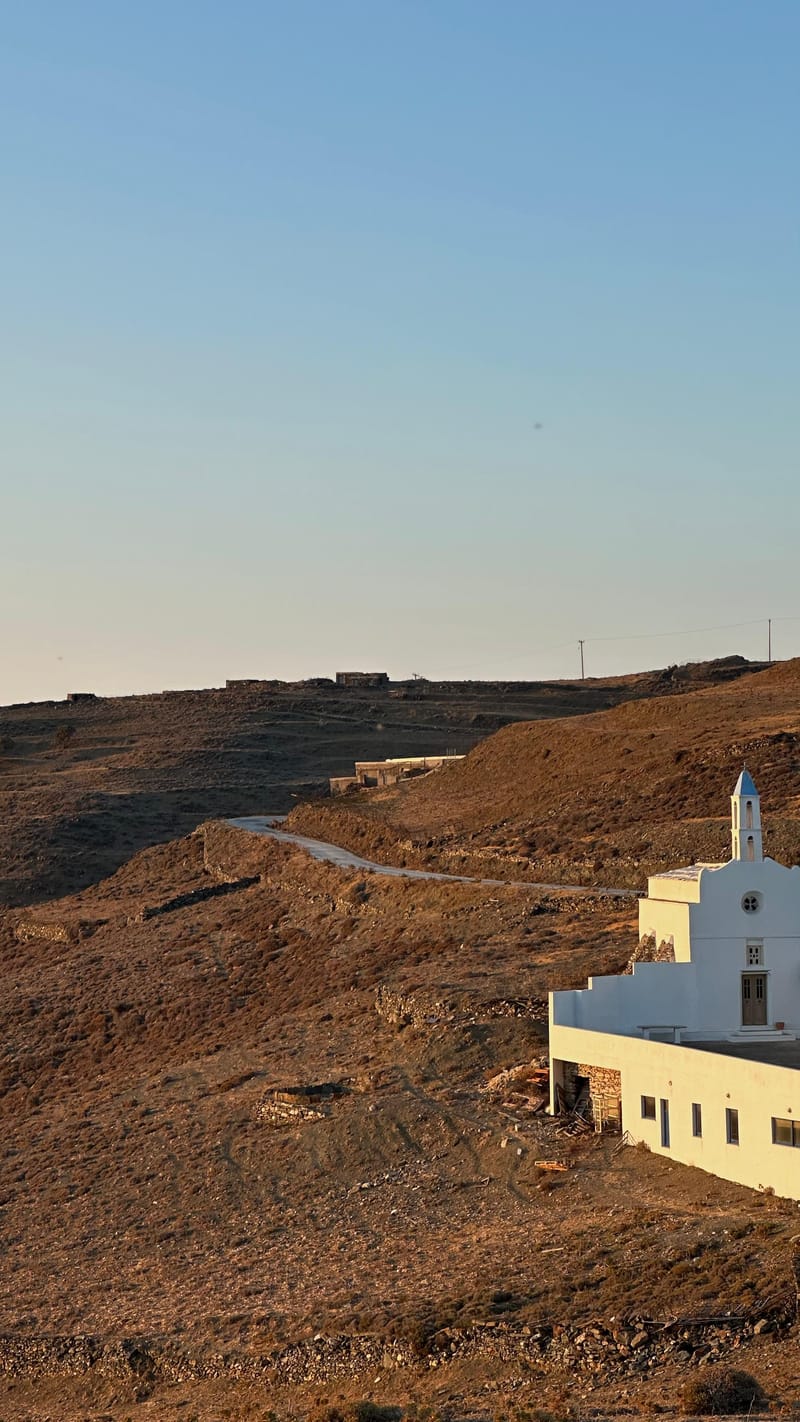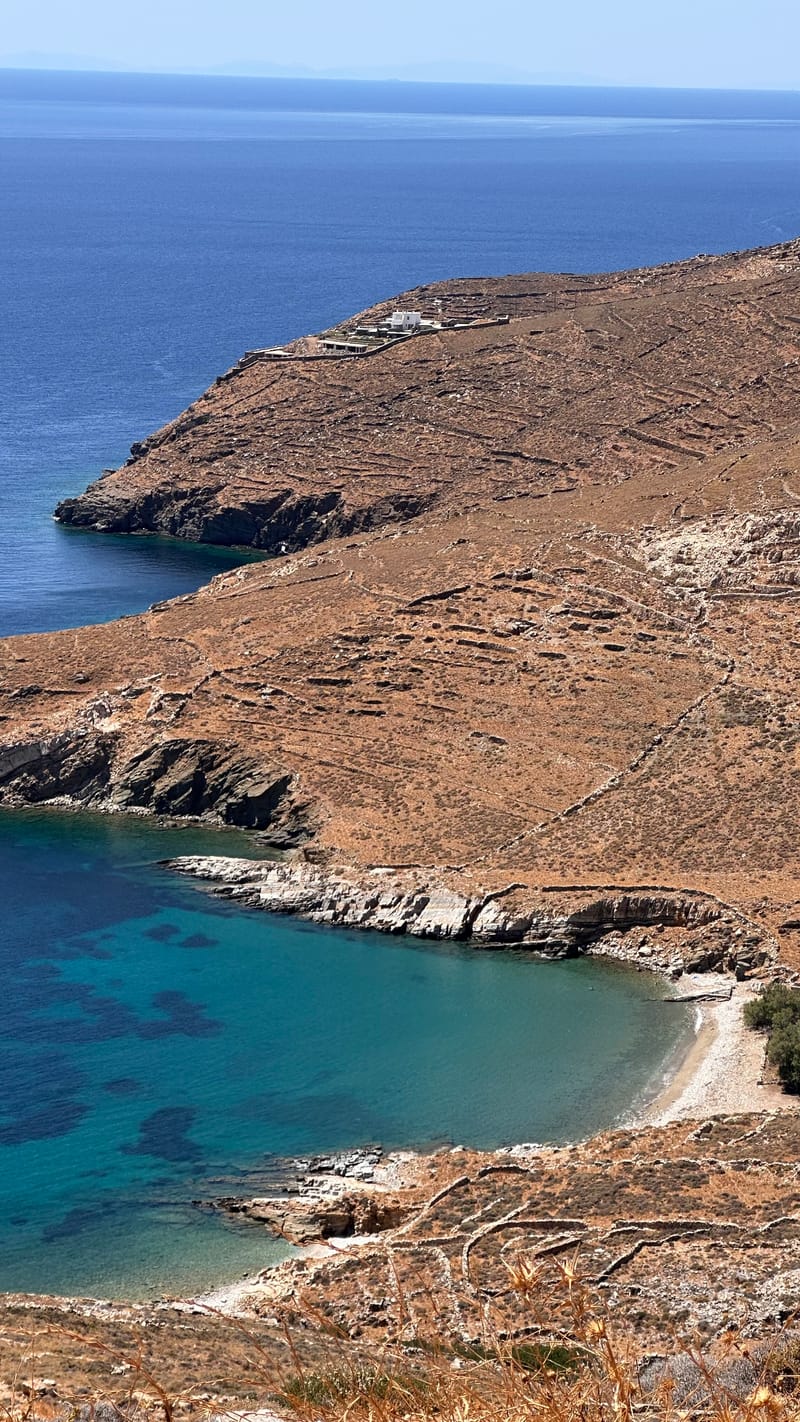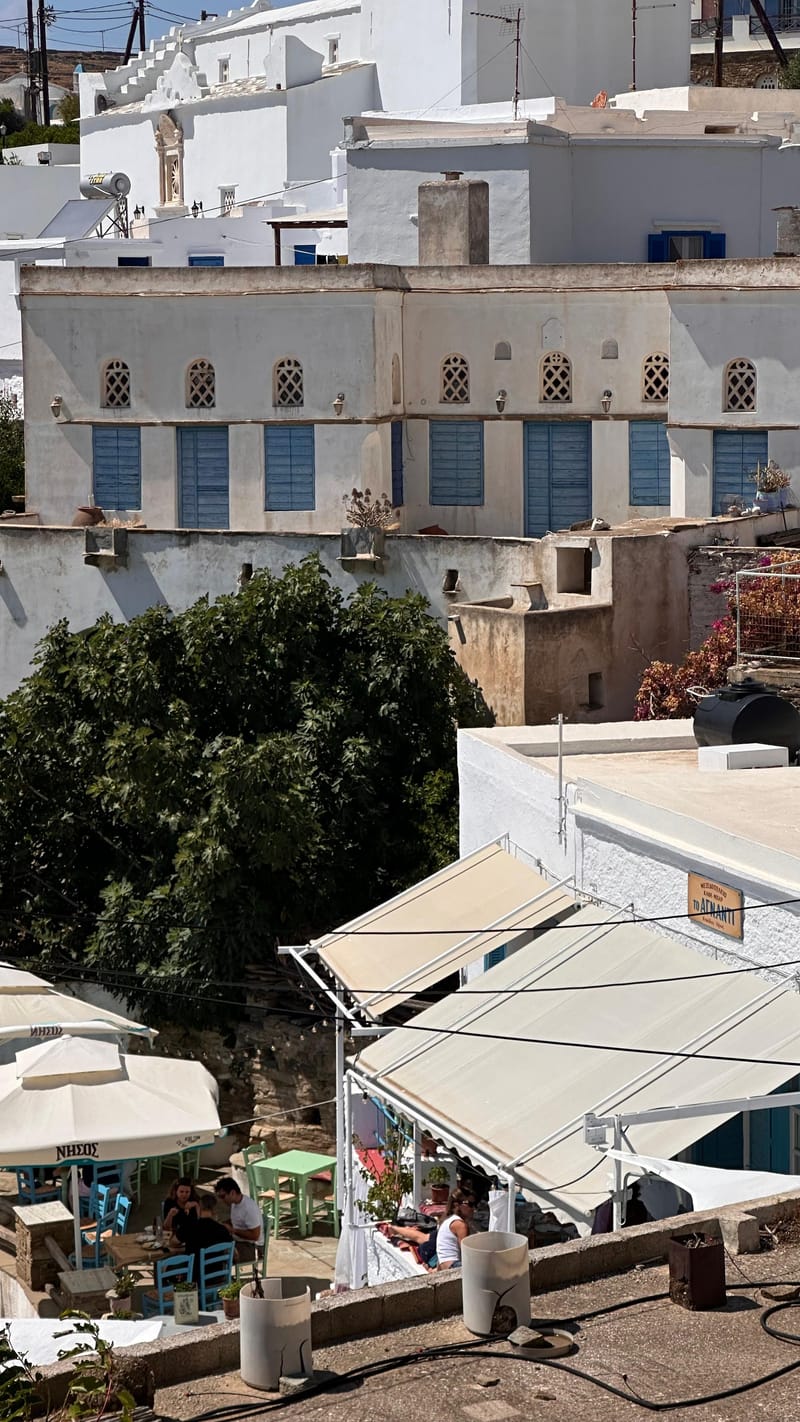
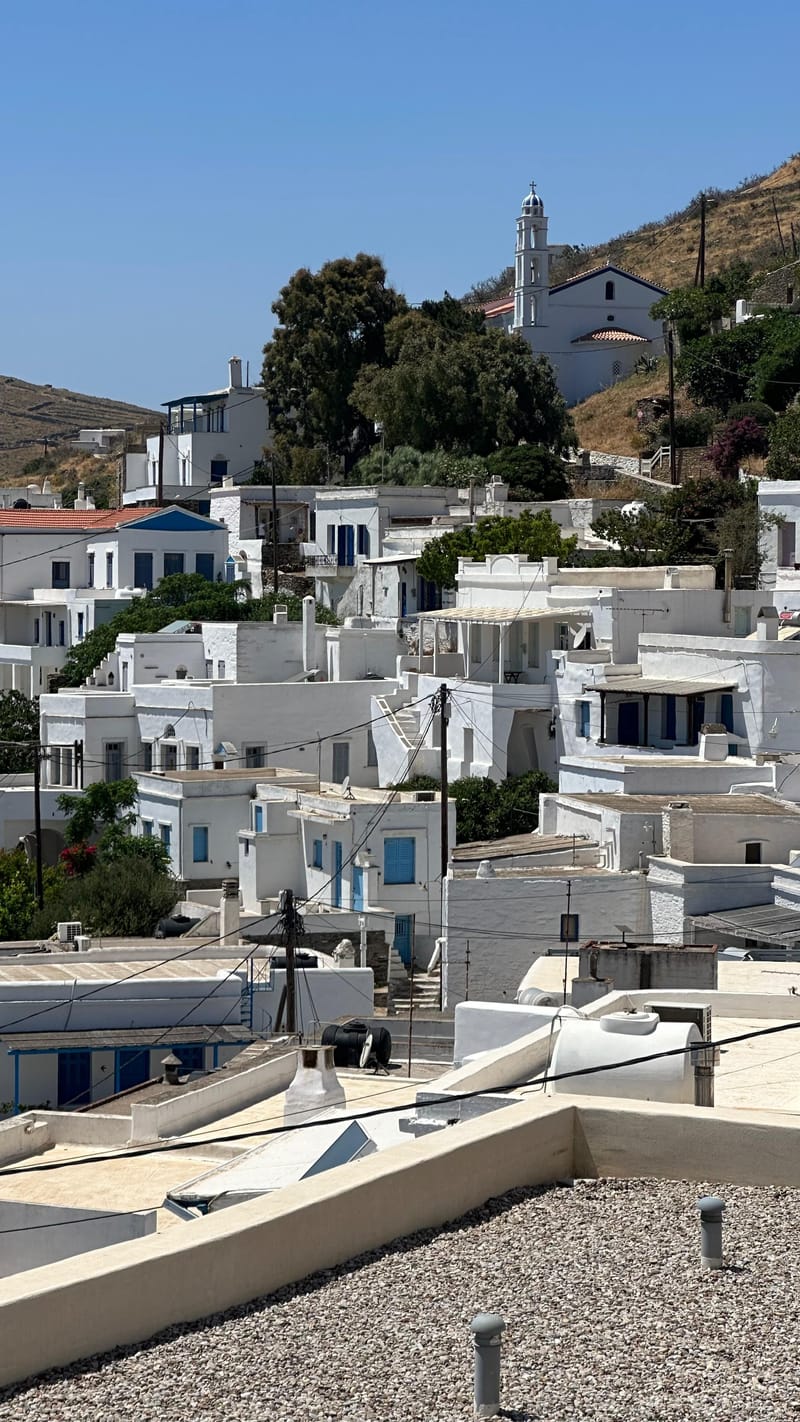
Tinos has more than forty villages, and they are the real heart of the island. Much of island life still happens up in the hills, where marble workers, basket weavers and farmers kept the villages alive. We grew up in one of them, Krokos, before Tinos became known to travellers. These are the ones we take friends to first.
Pyrgos
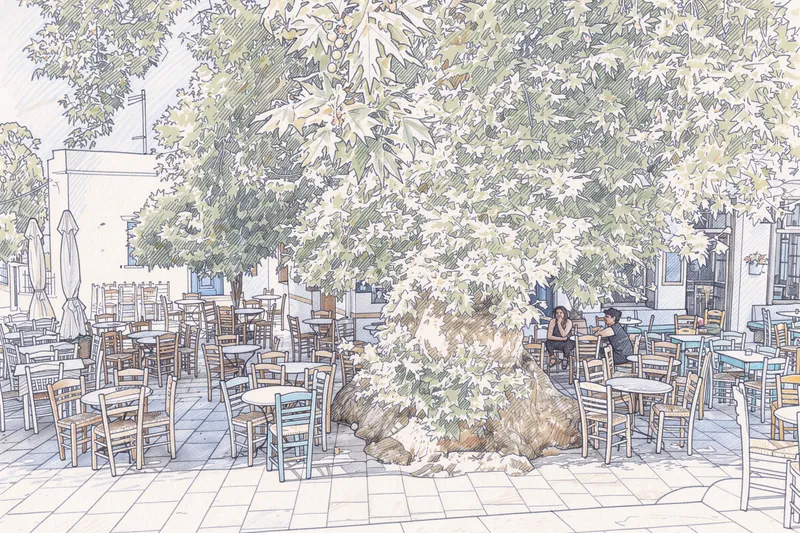
The largest village on the island and the home of Tinian marble. Marble is everywhere: lintels, fountains, arches and even the gravestones of the cemetery, which reads like an open-air gallery. Sit under the huge plane tree in the square with a coffee and a slice of galaktoboureko, the custard pastry the village is famous for. Then visit the Museum of Marble Crafts just outside the village and the house-museum of the sculptor Yannoulis Chalepas, who was born here. Below Pyrgos, the little harbour of Panormos is perfect for a swim and fresh fish.
Volax
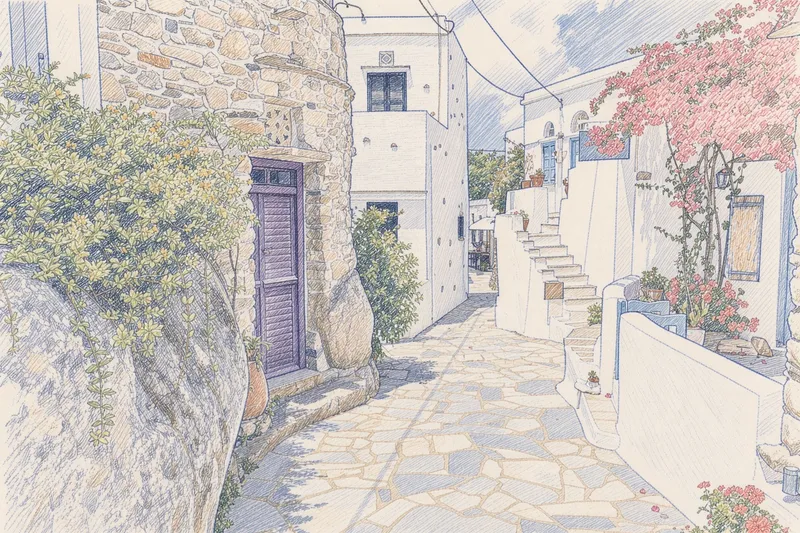
A small village on a plateau in the middle of the island, surrounded by giant round granite boulders that make the landscape look like the moon. Houses are built right among the rocks. Volax is known for basket weaving, and you can still visit the workshops. There is a small folklore museum and a stone open-air theatre that hosts concerts and plays in summer.
Kardiani
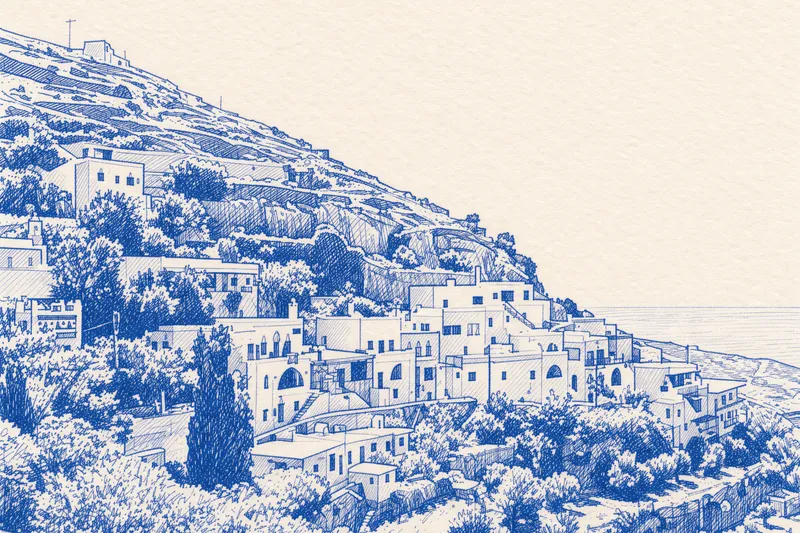
Perhaps the greenest village on Tinos, built on the slopes of Mount Pateles and full of springs and marble fountains. Its tall marble bell tower and the views over Kardiani bay towards Syros are unforgettable at sunset. Below the village lie the calm beaches of Kalyvia and Agios Petros.
Isternia
The “balcony of the Aegean”: a marble village built like an amphitheatre on the hillside, looking out to Syros. Many famous sculptors came from here, and you will see their craft in the carved lintels and arches of the lanes. Visit the Museum of Isternia Artists and the courtyard of Agia Paraskevi church for the view. A road leads down to Isternia bay for a swim.
Triantaros
A hillside village just above Tinos town, with wide views over the port and the neighbouring islands. Its roots go back to the Middle Ages. Wander between old springs and the ravines with dovecotes, then stop at Triantaraki for coffee or a drink on the terrace.
Dio Choria
The name means “two villages”, because two settlements grew together into one. Its main square is one of the largest in the Cyclades, shaded by tall plane trees and cooled by old fountains, with a church at each end of the village. The perfect place to slow down for an hour.
Also worth a stop
- Koumaros, a small village just next to Krokos, close to Volax.
- Arnados, a well-preserved mountain village near Triantaros.
- Kampos, with Venetian arches, bougainvillea and dinner on the square.
- Tarampados, for some of the most beautiful dovecotes on the island.
Two easy routes from AESIS
West: marble and sunset
- Kardiani for a walk and the view.
- Isternia for the lanes and a swim in the bay below.
- Pyrgos for the square and the marble museum.
- Back to Isternia or Kardiani for the sunset.
Centre: villages close to home
- Volax and its boulders in the morning.
- Kampos and Tarampados for the dovecotes.
- Dio Choria for a slow coffee under the plane trees.
- Triantaros at sunset, looking over the town.
Questions we often hear
What is the most beautiful village on Tinos? Everyone has a favourite. Pyrgos for marble, Volax for its landscape, Kardiani and Isternia for the view.
How many villages does Tinos have? More than forty, each with its own character.
Do I need a car to visit the villages? Yes, for most of them. Only a few can be reached by bus.
Can I visit the villages outside summer? Yes. Spring and autumn are the best seasons for walking between them.
Stay in the middle of it all
AESIS sits in Krokos, in the heart of the island, so every village on this list is a short drive away. Plan your meals with our food guide and check your dates.